NUK
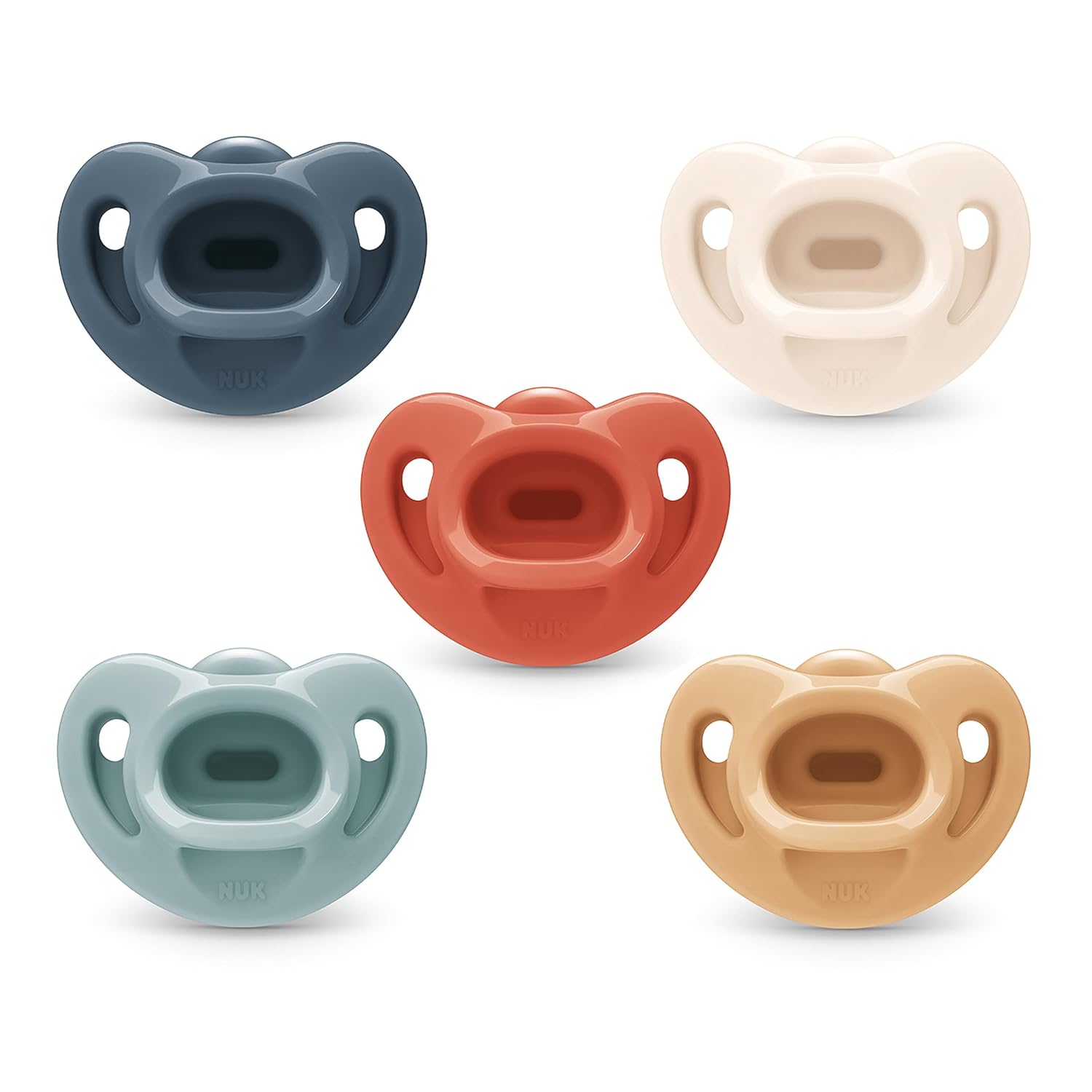
NUK Timeless Comfy Pacifier | 100% Silicone, One-Piece Design | BPA-Free, Gentle on Baby’s Skin | 5-Pack, for 0-6M
NUK Timeless one-piece silicone pacifiers for 0–6 months—simple shape, BPA-free, 5-pack.
Key Features:
- ✓100% silicone, one piece
- ✓0–6 month size
- ✓BPA-free
- ✓5-pack
Price and availability are on Amazon. Link may earn us a commission.
Full Product Review
Pacifier philosophy mutates between children faster than orthodontic blogs update. NUK’s Timeless line leans on a one-piece silicone story: fewer joints, fewer secret pockets, a shape some babies accept after rejecting others that felt too wide, too flat, or too “hospital nostalgic” when parents hoped for aesthetic minimalism. A five-pack acknowledges entropy—pacifiers migrate under cribs, into street gutters kicked from strollers, and occasionally into the washing machine for an accidental spa day.
Silicone aging shows as surface tackiness or bite marks when teeth arrive earlier than expected. Rotate packs so one favorite does not carry all structural stress. Boiling and steaming protocols deserve manufacturer respect; heat warps shields if you improvise aggressively.
Sizing 0–6 months is guidance, not gospel. Cheek marks, persistent gag, or refusal signal mismatch. Lactation consultants sometimes weigh pacifier timing against feeding coordination—ask personalized questions rather than collecting forum trophies.
Color and shield geometry influence lip clearance and nose breathing tiny degrees that feel enormous at 2 a.m. Photograph fit in natural light if telehealth consults arise; angles clarify words.
Cleaning on the go: carry spare snack bags for “dirty” pacifiers awaiting home wash—do not mix with clean without labeling chaos.
Orthodontic reassurance threads online oscillate wildly; pediatric dentists publish age guidance on pacifier weaning—bookmark credible sources instead of dread-scrolling.
Partners should standardize shape to avoid preference splits; grandparents benefit from written brand notes, not memory.
Night weaning pacifiers differs from daytime; consistency across caregivers prevents clever loopholes toddlers exploit.
Travel: clip leashes help until they become strangulation questions—follow safety updates. Air pressure changes rarely affect silicone materially; sanity changes constantly.
If pets steal pacifiers, elevate drying racks. If siblings trade them as bargaining chips, intervene early with humor and hygiene.
Five packs also mean gifting spares thoughtfully—sanitized, labeled, humble.
NUK’s naming evokes classic design; your baby cares about mouth feel, not branding history. Trust empirical acceptance: calm sucking, relaxed hands, steady breathing. If rejected, try another day without narrative that you failed.
Eventually weaning arrives—snipping tips, holiday fairy trades, or pediatric strategies. One-piece silicone simplifies some stories complicates none emotionally.
Document sterilizer compatibility if you use microwave bags; not all silicone tolerates identical cycles.
In apartments, boiling odor travels; ventilate kindly for neighbors cooking dinner at the same moment you sanitize.
Pacifiers are small objects carrying large parental hope for soothing. This pack is backup, rhythm, and the tactile promise that sometimes silence is reachable—briefly, beautifully, until the next need announces itself.
If your baby uses a tongue-tie release protocol, follow post-op sucking guidance—pacifier timing may shift temporarily.
Photograph color for insurance if a dog destroys a stash—odd but documented. If a pacifier falls on restaurant floors, five-pack sanity means sacrifice without tears—hygiene beats heroics.
Backup pacifiers in winter coat pockets save walks when stroller clips fail silently. If sterilizer descaling lags, mineral film affects heating—read boring maintenance pages.
Wedding season means pacifiers in suit pockets—plan ahead. If dye from clothing bleeds onto silicone, replace—cosmetic chemistry annoys caregivers aesthetically.
If older children mimic pacifier use for attention, humor helps; hygiene still matters. Orthodontic consults at age three may reference history—keep a note casually.
If pacifiers glow under UV club lights, you have stranger stories—inspect materials seriously though.
If speech therapy later enters life, therapists may ask about early sucking patterns—honest timelines help.
If silicone discolors from tomato-heavy spit-up, aesthetics bother some more than function—replace if needed.
If daycare requires disposable bags for soiled pacifiers, keep small extras—rules vary by county.
If fireworks startle, pacifiers help some babies—comfort layers matter seasonally. Document brand preferences for caregivers rotating shifts—night nurses appreciate clarity. Breathe through regressions. You are enough.
Specifications
Asin
B0914D1RQL
Age
0–6M
Count
5